


Insights
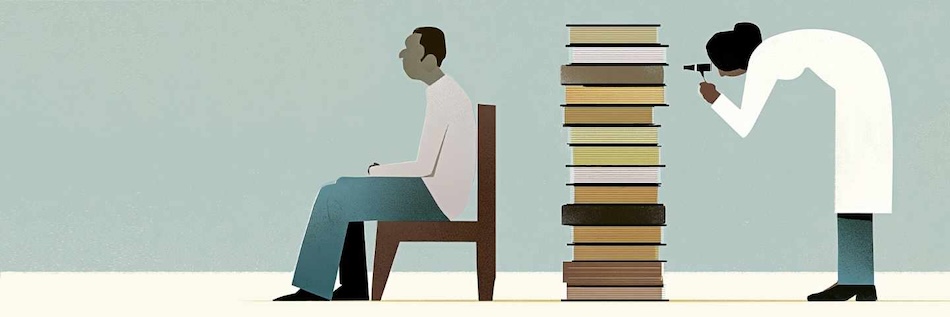
A family does not want a dying relative told that death is near. A patient declines treatment because the clinician is racialized. A patient nods politely but, in reality, disagrees with the treatment. Another asks for time and an appropriate place to pray.
These are not additional or unusual ‘cultural problems'. They are everyday healthcare moments.
The problem? The majority of students enter clinical practice with more training in rare diseases than in the beliefs, healing practices, power dynamics and communication gaps that can shape patient outcomes and experiences.
We should be honest: We are not doing enough to prepare students for intercultural care.
This means more than receiving a lecture on ‘culture'. They need the skills to notice their own biases, assumptions, ask better questions, manage disagreement and make sound clinical decisions when the usual script does not fit. This is not an optional add-on to medical education – it is part of safe care.
The World Health Organization defines health equity as the absence of unfair and avoidable differences in health among groups of people. That goal cannot be met if health students are trained to see clinical care as the only transaction where non- clinical practices are not considered.
Patients bring their realities, beliefs, practices, etc. to the exam room. They may draw on family guidance, faith, traditional healing, karma or past experiences. And/or have good reasons to distrust the health system. A person who has faced racism, dismissal or language barriers may not hear the same words in the same way as others.
This does not mean that every belief must be accepted without question. Cultural humility is not cultural surrender. A clinician still has a duty to explain risk, protect safety and offer evidence-based care. But that duty is more likely to succeed when the patient is respected for their beliefs and practices.
The answer is not a catalogue of cultural do’s and don’ts. These ‘checklists’ may create new problems while pretending to solve the old one. The better approach is to train students in intercultural competence: the ability to communicate across differences with curiosity, flexibility and respect.
The National CLAS Standards offer a useful framework for responsive and respectful services. And students need repeated chances to use these skills (not one annual seminar).
Consider:
- A family asks a palliative care team not to disclose a poor prognosis to their loved one. Students should learn how to explore why the family feels this way, assess the patient’s wishes and capacity and uphold the patient’s right to information without humiliating the family
- A patient is fasting for religious reasons while taking medication that must be given with food. The answer is not, ‘the patient non-compliant. ’ The team should ask what the fast means to the patient, explain the medical concern, consult appropriate supports and look for a safe plan
- A patient refuses care from a clinician because of race, religion, gender, sexual orientation or accent. Students need guidance on how to respond without endorsing discrimination or turning the encounter into a test of personal virtue. Safety, dignity and professional boundaries all matter
- A patient appears to agree with a treatment plan but later does not follow it. Before blaming the patient, the clinician should ask a simple question: “Can you tell me, in your own words, what we discussed and your thoughts?”
Students should be enabled to discuss these kinds of scenarios and examine what they felt, assumed and where power sat in the conversation. They should practise plain language, shared decision-making.
They should learn that “I don’t know” can be the start of a good clinical question, not a sign of failure.
Assessment matters, too. If schools say these skills are important but grade only biomedical knowledge, students will notice. Competency in health equity should be built into clinical teaching, observed in practice and valued in promotion. It should be part of the curriculum’s spine, not a decorative ribbon tied around it.
Perhaps we should retire the phrase ‘culturally competent’ when it suggests that culture is a test one can pass once and for all. No one becomes fluent in every culture. The goal is not to become an expert on everyone else. The goal is to become less certain that our own way is the only reasonable way.
Healthcare is full of uncertainty. We teach students to manage uncertainty about symptoms, tests and treatment. We should also teach them to manage uncertainty about people.
If we want a fairer health system, we must train the people within it to recognize how differences, bias and power can affect care, outcomes and experiences. Strong intercultural skills will not solve every inequity. But without them, even the best policy can fail at the bedside.
About the Author(s)
Gurwinder Gill (she/her), (Retired) Director, Associate Professor and Author: Health Equity, Inclusion and Anti-discrimination. Director, Associate Professor, Author, Educator and Speaker in health equity, inclusion and anti-iscrimination with target audiences of clinicians and healthcare/health sciences students
Comments
Be the first to comment on this!
Personal Subscriber? Sign In
Related Articles


Note: Please enter a display name. Your email address will not be publically displayed