
Logo

Sign in | Create an Account Cart 0
Sign In
Forgot password?
Institutional Users can Sign In here
Don't have an Account?
Create an account
 
Forgot Password
 
Thank You for Registration

Thank-you for creating an account on Longwoods.com.

As a registered user of longwoods.com you can receive the following benefits:
  • Abstracts from ALL Longwoods.com publications
  • Citation tracking and reference links to full-text articles
  • Ability to share the information through various social media outlets with a single click
  • Ability to comment on any article
  • Pay-per-View purchases of single articles or issues by credit card or paypal
  • Choice of any www.longwoods.com/newsletters delivered to your email inbox for free
  • Ability to sign up for any www.longwoods.com/events.
  • The advantage of having password access to www.Longwoods.com from any computer anywhere
Please check your e-mail and follow the instructions to activate your account. If you do not receive an e-mail, please check your junk folder.
Reset Password

Please check your e-mail and follow the instructions to reset your password.

Menu
  • Home
  • Topics
    • Access to Care
    • Aging
    • Alternative Levels of Care
    • Caregivers
    • Change Management
    • Community Care
    • COVID-19
    • Decision Making
    • Digital Health
    • Effective Teamwork
    • Equity in Healthcare
    • Governance
    • Health Human Resources
    • Health System Innovation
    • Healthcare Costs
    • Healthcare Policy
    • Healthy workplaces
    • Home Care
    • Innovations in Care
    • Leadership Development
    • Long-Term Care
    • Longwoods Healthcare Services Radio
    • Mental Health
    • Nursing Leadership
    • Pandemic Planning
    • Patient Experience
    • Patient Safety
    • Patient-Centered Care
    • Primary Care
    • Public Health
    • Quality Improvement
    • System Integration
    • Workforce Planning
  • Events
    • Longwoods Breakfast Series
    • Healthcare Rounds
    • Leadership Discussion
    • Conferences and Education
    • Healthcare Awards
  • Publications
    • Healthcare Quarterly
    • HealthcarePapers
    • Healthcare Policy
    • Nursing Leadership
    • Insights
    • Special Issues
    • White Papers
    • Longwoods Blog
    • World Health & Population
    • ElectronicHealthcare
    • Law & Governance
    • Books
  • Multimedia
    • Videos
    • Podcasts
  • Jobs
    • Longwoods Job Site
    • HR Resources Database
    • Transitions
    • Rates for Job Postings
  • Subscribe

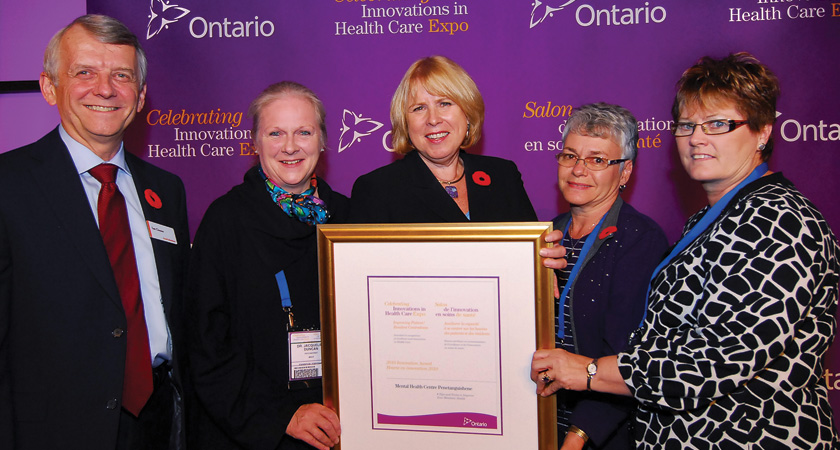
2010 Award Winner

Tips and Tricks to Improve your Metabolic Health

Category - Improving Patient/Resident Centredness

The Problem

Metabolic syndrome is the name for a group of risk factors that are linked to obesity. These risk factors increase the risk for heart disease and other health problems, such as diabetes and stroke. Research has shown that people with psychiatric illness are at far higher risk than the general population for developing metabolic imbalance and ultimately Metabolic Syndrome. The reasons for this include medications – which can cause significant weight gain – as well as sedentary lifestyle, poor diet, smoking habits, poverty, living conditions, co-morbid addictions, and lack of comprehensive medical care.

The Innovation

Clinicians at the Mental Health Centre in Penetanguishene had become increasingly concerned about prescribing psychotropic medication to clients who because of poverty and/or poor lifestyle choices were often already morbidly obese or suffering from diabetes, pre-diabetes, high lipid levels and hypertension. They decided to develop a program to address these concerns, and undertook a comprehensive literature search to study other organisations that were establishing similar programs. They developed a work plan and created an inter-professional team composed of a psychiatrist, three registered nurses, a registered dietician, a therapeutic recreationist, an addictions counsellor, an occupational therapist, a chaplain, a social worker, an aesthetician, and a peer support worker. They also developed a series of best practice education modules. The first series of modules commenced in September 2009.

The Results

The Mental Health Centre is reporting increased clinical monitoring of clients who are prescribed psychotropic medications, in addition to a greater general awareness of the existence of Metabolic Syndrome as a serious illness in clients suffering from mental illness. There is also increased collaboration between hospital programs and departments to mitigate the risks associated with mental illness and its treatment. The rate of client referral to the program is progressively rising as word of its success spreads.

Next Steps

As this project moves forward, mandatory referral to the clinic may be implemented for all clients prescribed novel antipsychotics. In addition, research in this area is being stepped up, with an eye to expanding the program and adjusting it to fit different patient populations.

Contact information

Contact Us
Mailing address

260 Adelaide Street East, No. 8, Toronto ON M5A 1N1

Telephone number
416-864-9667
Fax number
416-368-4443

Subscribe Today

  • Canadian Journal of Nursing Leadership

    Leadership in nursing management, practice, education and research 

Stay Connected

Newsletter
© 2026
Longwoods Publishing Corporation
  • Institutional Users
  • About Us
  • Subscription Information
  • Advertise
  • Reprints
  • Partners
  • Terms
  • Privacy